

Members
The Graduate School Genetics and Epigenetics New Education (Ecole Universitaire de Recherche Génétique et Epigénétique Nouvelle Ecole – EUR GENE) brings together nine research units and two doctoral schools and one University Hospital Institute (IUH). This includes the Complex Continuing Care Unit’s (USPC) technology platforms and resources.

RESEARCH UNITS AND INSTITUTES
Jacques Monod Institute (UMR 7592, CNRS)
The Jacques Monod Institute (IJM), a joint research unit of the CNRS and the Université Paris Cité, is one of the main centers of basic research in biology in the Paris region.
Epigenetics and Cell Fate Centre (UMR 7216, CNRS)
The Epigenetics and Cell Fate Centre is a multidisciplinary research center, founded in 2009 on the Paris Rive-Gauche campus. It brings together a network of teams with complementary expertise in the fields of stem cell differentiation and epigenetics, in particular DNA methylation, histone variants and modifications and non-coding RNAs.
Research at the Epigenetics and Cell Fate Center focuses on the importance of epigenetic regulation in determining cell fate and differentiation programs in mammals under normal and pathological conditions.
Functional and Adaptative Biology Unit (UMR 8251, CNRS)
Research carried out within the BFA unit aims to study the impact of the environment (nutritional, xenobiotic) on the functioning of living organisms at the molecular, cellular and integrated levels, using approaches ranging from in silico to preclinical and clinical studies.
Integrated Red Blood Cell Biology Unit (UMR 1134, INSERM)
The work of the Integrated Red Blood Cell Biology Unit focuses on the elucidation of the gene and protein structures of blood group antigens, the molecular analysis of their polymorphisms and the understanding of the molecular mechanisms involved in certain inherited disorders of the erythrocyte membrane.
Human Genetics and Cognitive Functions (URA 2182, Institut Pasteur)
The purpose of the Human Genetics and Cognitive Functions lab’s research is to identify new genetic pathways involved in human social interactions and communication, and to propose an evidence-based approach to ASD that should help improve diagnosis, care and integration.
Saint Louis Research Institute (UFR, IRSL)
The Saint Louis Research Institute is the integrated research and teaching institute of Saint Louis Hospital. The first European hematopoietic stem cell transplant center, it develops scientific and technological research at the crossroads of several disciplines: hematology, immunology, virology and oncology. Research topics include cellular transformation processes, transplantation immunology, modeling and experimental pharmacology approaches, and systemic biology.
Neurodevelopmental and Neurovascular Diseases (UMR 1141, INSERM)
The Neurodevelopmental and Neurovascular Diseases unit work on understanding the mechanisms that alter the functioning of the developing brain from the fetus to the adolescent, whether the origins of the dysfunctions are genetic or acquired (as a result of infection or physical trauma for example) and regardless that diseases are frequent or affect only a small number of patients (rare diseases).
Cochin Institute (UMR 1016, INSERM/CNRS)
The Cochin Institute is organized into three scientific departments, each consisting of 6 to 18 teams:
- Development, Reproduction, Cancer
- Endocrinology, Metabolism, Diabetes
- Infection, Immunity, Inflammation
Since its creation, the Cochin Institute has invested a lot in the development of efficient and innovative technology platforms, serving its teams, as well as all University teams and external teams, whatever their nature, public or private. The Cochin Institute now has nine technological platforms.
Necker-Enfants Malades Institute (INSERM/CNRS)
The Institute Necker-Enfants Malades (INEM), created in January 2014, is an international biomedical research centre located on the campus of the Necker Hospital and supported by the Institut National de la Santé et de la Recherche Médicale (INSERM), the Centre National de la Recherche Scientifique Recherche (CNRS) and the Université Paris Cité.
Research at INEM focuses on common diseases caused by the interaction between heredity and environmental factors.
DOCTORAL SCHOOLS
Hematology – Oncogenesis – Biotherapies (HOB)
The doctoral school “Hematology – Oncogenesis – Biotherapies”, HOB has chosen to focus the research themes offered to doctoral students in key areas of health research in order to match training with the opportunities resulting from the societal demand. The school is in three major areas: Oncogenesis, Hematology, Biotherapy and Biotechnology.
The doctoral school HOB supports experimental and clinical work aimed at elucidating oncogenesis mechanisms specific to different types of solid or hematopoietic tumors in order to develop medical tools for the personalized management of cancers (diagnosis, treatment and follow-up).
Bio Sorbonne Paris Cité (BioSPC)
The Bio Sorbonne Paris Cité (BioSPC) Doctoral School results from the merger of two doctoral schools: the B3MI Doctoral School of Université Paris Cité and the Gc2iD Doctoral School of Université Paris Cité. This new doctoral school offers a wide range of fields that cover most disciplines of Biology and an offer of laboratories for the preparation of the thesis.
The scientific scope of the ED BioSPC covers cell and molecular biology, development, immunology, infectiology, genetics, neurobiology, physiology, physiopathology, reproduction and aging.
INSTITUT HOSPITALO-UNIVERSITAIRE
Imagine Genetic Diseases Institute (INSERM)
Imagine helps to bring together public and private research to make diagnostics and treatments accessible as quickly as possible, on the basis of a flexible and responsive organization.
The goal of the institute is to cure genetic diseases. To achieve this goal, the Imagine Genetic Diseases Institute has devised four complementary and interdependent missions: research, innovative care, teaching and valorization.
Read more
![[Mobility Grant] Shiou Ping Chen present her research project at the 11th International Congress of Neuroendocrinology in Nagoya, Japan](https://eur-gene.u-paris.fr/wp-content/uploads/sites/7/2026/09/Sans-titre-1920-x-1080-px1041-1080x675.png)
[Mobility Grant] Shiou Ping Chen present her research project at the 11th International Congress of Neuroendocrinology in Nagoya, Japan
Our Graduate School G.E.N.E. is pleased to announce that Shiou Ping CHEN, a 3nd-year PhD student in the BioSPC Doctoral School (ED562), is a recipient of our mobility grant. This scheme provides financial support to master's and PhD students wishing to present their...
![[G.E.N.E. Fellow] Congratulations to Maurizio Scime, Laureate of an IdEx Graduate Schools International Doctoral Contract](https://eur-gene.u-paris.fr/wp-content/uploads/sites/7/2026/09/These1-1-1080x675.jpg)
[G.E.N.E. Fellow] Congratulations to Maurizio Scime, Laureate of an IdEx Graduate Schools International Doctoral Contract
Our Graduate School is very excited to announce that our G.E.N.E. fellow, Maurizio Scime, has been selected as a Laureate for an IdEx Graduate Schools international doctoral contract for the 2026–2029 period. Following this selection, Maurizio will join the BioSPC...
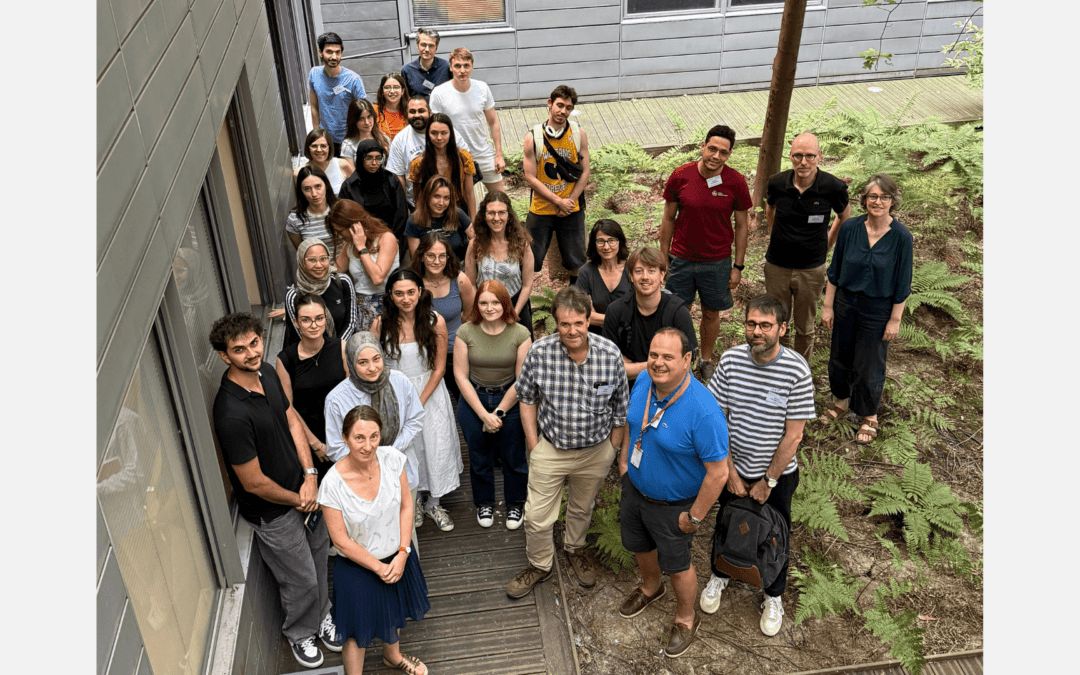
“Frontiers in Genome Stability and Dynamics”: A look back at the summer school at the heart of the 3Rs
From July 6th to July 8th, 2026, the Graduate School G.E.N.E. and the Institut Jacques Monod (Université Paris Cité) hosted the "Frontiers in Genome Stability and Dynamics" summer school at the Pierre-Gilles de Gennes Amphitheatre (Campus des Grands Moulins).All the...
![[Faculty Mobility Grant] Sandrine Caburet, Associate Professor, shares her experience at the REBIF and JOBIM events in Strasbourg](https://eur-gene.u-paris.fr/wp-content/uploads/sites/7/2026/08/Sans-titre-1920-x-1080-px941-1080x675.png)
[Faculty Mobility Grant] Sandrine Caburet, Associate Professor, shares her experience at the REBIF and JOBIM events in Strasbourg
Our Graduate School G.E.N.E. is pleased to announce the very first mobility grant awarded to a faculty member within our Magistère Européen de Génétique. We supported Sandrine Caburet, Associate Professor, through our mobility funding scheme, for her participation in...